
The Agent Readiness Index 2026
We scanned 40 public documentation sites, 373 pages in all, the way AI crawlers read them. Then we scored each site on whether agents can reach the content, read it and get it right.
| Industry | Access | Content | Trust | Overall |
|---|---|---|---|---|
| Developer platformscontrol | 9.0 | 9.2 | 4.7 | 7.7 |
| Healthcare & life sciences | 6.5 | 8.8 | 3.6 | 5.7 |
| Security & infrastructure | 7.5 | 6.3 | 2.2 | 5.1 |
| Medical devices & industrial | 8.0 | 4.8 | 2.5 | 4.9 |
| Enterprise software | 7.3 | 1.9 | 2.1 | 4.2 |
median Agent Readiness score across the 40 documentation sites
documentation homepages outside developer platforms return almost no text to AI crawlers
median Trust score: most pages don't tell agents which version or date they cover
documentation sites score 8.0 or higher
Key findings
Five things we found in 373 documentation pages
Documentation homepages outside developer platforms return almost no text to AI crawlers
The latest release notes, security notices and "start here" links on these homepages load with JavaScript. AI crawlers that don't run JavaScript receive an empty page. All 8 developer platform homepages in the study return their full text.
Documentation sites let every major AI crawler in. The problem is what those crawlers receive.
38 sites allow GPTBot, ClaudeBot, PerplexityBot and three other AI agents in robots.txt. Yet enterprise software documentation sites have a median Content score of 1.9 out of 10.
Trust is the weakest score in every industry: pages rarely state their date or version
The median Trust score is 2.5, against 8.0 for Access and 7.1 for Content. Only 13 of 40 sites put a machine-readable date on most pages, and 8 of 40 state a last-updated date or version in text agents can read.
Mid-market companies outscore enterprises
Median score for companies under 5,000 employees is 6.8; for enterprises, 5.0. 6 of the 7 top-scoring sites in the core 40 come from mid-market companies.
Documentation sites with a usable llms.txt file
20 sites have no llms.txt. 4 return a web page at /llms.txt instead of the file, so tools that check for one get a false positive. Every top-scoring site has a valid llms.txt.
AI crawlers can get into almost every documentation site in the study. On 15 of the 40 homepages, they receive almost nothing. Across most pages, nothing tells them which version or release date the content covers.
All 40 documentation homepages
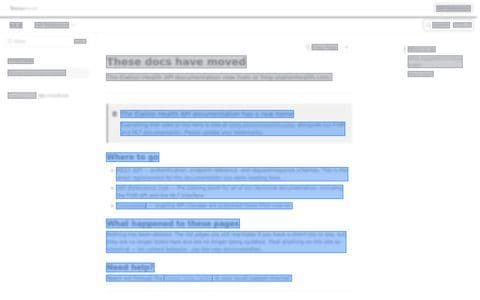
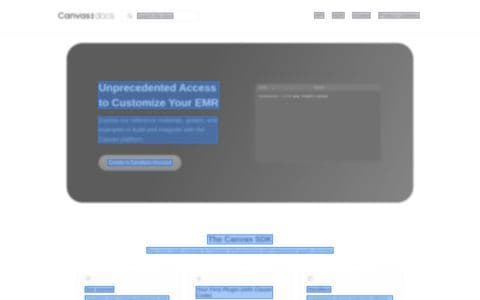
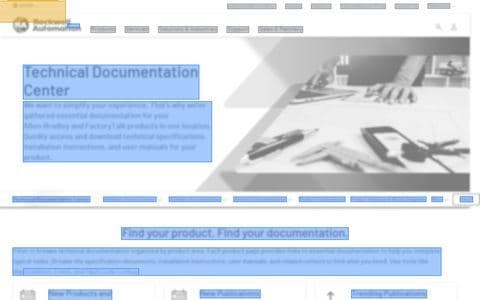
What AI crawlers receive from each homepage
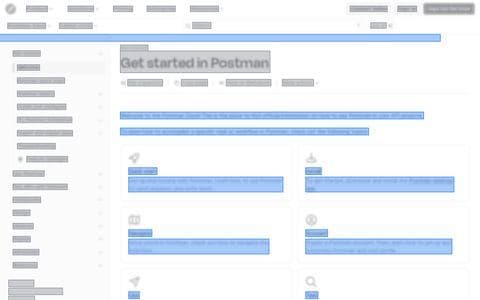
Each tile is the first screen of a documentation homepage, colored by what an AI crawler receives. Tiles are blurred; only the Documentation Top 10 are named in this report.
- AI crawlers receive this text
- Text appears only after JavaScript runs
- Video or embed with no text equivalent
- Navigation, header and footer




 blank to crawlers
 blank to crawlers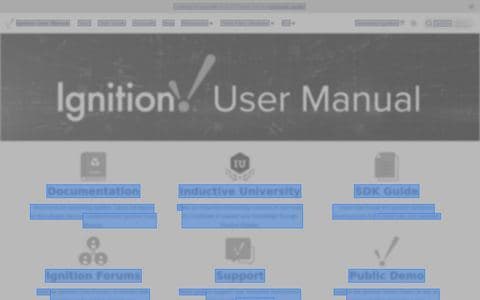



 blank to crawlers
 blank to crawlers
 blank to crawlers



 blank to crawlers
 blank to crawlers
 blank to crawlers
 blank to crawlers
 blank to crawlers
 blank to crawlers
 blank to crawlers
 blank to crawlers
 blank to crawlers
 blank to crawlers



How we scored
Three scores, each out of 10
Every site got the same test on the same day: the homepage plus up to nine pages drawn from its sitemap, each read three ways. As a person sees it in a browser, as an AI crawler receives it, and as an AI tool that doesn't run JavaScript receives it.
Robots.txt rules for six AI crawlers, a sitemap with last-modified dates, a valid llms.txt, and pages that load without a login.
How much of the text a person sees is in what the crawler receives, on the homepage and on doc pages, plus page structure and load time.
Machine-readable dates, a stated version or last-updated date, a canonical URL and structured data on each page.
Full method and scoring rubric in the appendix.
The Index
Every site's overall score, by industry
Each dot is one documentation site. The line marks the industry median.
Top performers
The Documentation Top 10
| # | Documentation site | Industry | Access | Content | Trust | Overall |
|---|---|---|---|---|---|---|
| 1 | Elation Health* | Healthcare & life sciences | 10.0 | 9.5 | 10.0 | 9.8 |
| 2 | Zapier | Developer platforms | 10.0 | 9.3 | 9.7 | 9.7 |
| 3 | Cloudflare | Developer platforms | 10.0 | 10.0 | 8.8 | 9.6 |
| 4 | Canvas Medical | Healthcare & life sciences | 10.0 | 10.0 | 7.6 | 9.2 |
| 5 | Vercel | Developer platforms | 9.0 | 9.4 | 8.5 | 9.0 |
| 6 | Tempo | Enterprise software | 10.0 | 9.8 | 5.3 | 8.4 |
| 7 | Canadian Cancer SocietyDiscoverCX customer | Healthcare information | 10.0 | 8.6 | 6.2 | 8.3 |
| 8 | Inductive Automation | Medical devices & industrial | 9.0 | 7.4 | 7.7 | 8.0 |
| 9 | Postman | Developer platforms | 10.0 | 9.1 | 4.6 | 7.9 |
| 10 | Rockwell Automation | Medical devices & industrial | 10.0 | 5.9 | 7.0 | 7.6 |
* Scored on fewer than five pages because the site's sitemap lists few URLs.
By industry
Developer platforms lead. Enterprise software documentation trails.
Eight documentation sites per industry, four from enterprises and four from mid-market companies. Developer platforms are the control group.
- 2 of 8 homepages blank to AI crawlers
- 2 of 8 score 8.0 or higher
- Weakest score: Trust
- 3 of 8 homepages blank to AI crawlers
- 1 of 8 score 8.0 or higher
- Weakest score: Trust
- 4 of 8 homepages blank to AI crawlers
- 0 of 8 score 8.0 or higher
- Weakest score: Trust
- 6 of 8 homepages blank to AI crawlers
- 1 of 8 score 8.0 or higher
- Weakest score: Content
- 0 of 8 homepages blank to AI crawlers
- 3 of 8 score 8.0 or higher
- Weakest score: Trust
Four sites per industry per size band, so treat size comparisons within an industry as directional.
Teardowns
Two documentation homepages, as an AI crawler receives them
 123456
The newest content is what AI crawlers miss
- 1Main heading Readable
One line of text is all an AI crawler receives from this homepage.
- 2Latest security updates JavaScript only
The most time-sensitive list on the site loads after the page does.
- 3Latest knowledge base articles JavaScript only
The articles are in the sitemap, but nothing marks them as new.
- 4Featured videos No text
Embedded players with no transcript or summary on the page.
- 5FAQ and task cards JavaScript only
The "start here" guidance people see first never reaches the crawler.
- 6Footer and navigation Chrome
Readable, but it is links, not answers.
Render the homepage lists on the server, or add a plain list of links under each widget. Either one puts the release notes and security notices in front of AI crawlers.
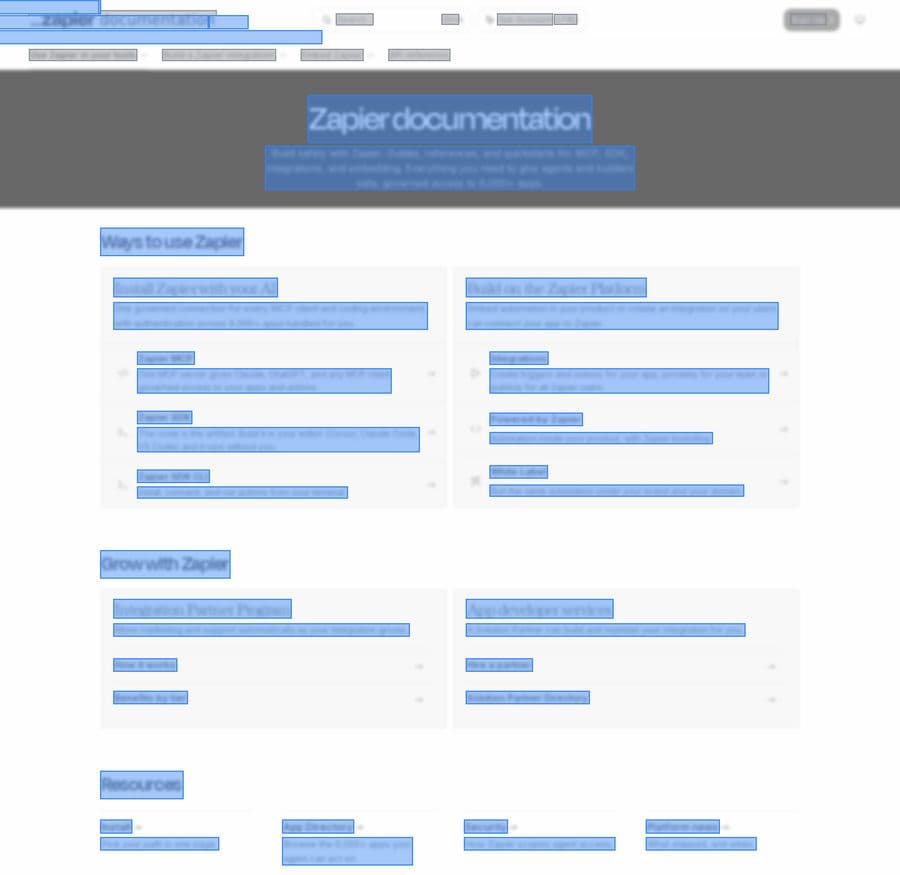
Zapier: 9.7 out of 10
- Pages ship as finished HTML, so AI crawlers receive the same text a person reads.
- A valid llms.txt lists the site's main sections for agents.
- Every sampled page carries a canonical URL, structured data and a machine-readable date.
- All six AI crawlers are allowed in robots.txt.
Dates and versions
Most documentation pages don't tell AI agents which version or date they cover
When an agent can't see a page's date or version, it can't tell current instructions from outdated ones. It answers anyway. In regulated industries, that's the risk that matters most.
We also checked by hand for conflicting dates and outdated versions in the teardowns. One site shows people one date and AI crawlers another.
What the top performers do
Six things every site at 8.0 or higher has in common
None of the top performers has a homepage that is blank to AI crawlers.
GPTBot, OAI-SearchBot, ChatGPT-User, ClaudeBot, Claude-User and PerplexityBot.
Plain text that names the site and lists its main sections with links.
So agents cite one address instead of duplicates.
In the page markup, not only in the design.
At least 80% of the text a person sees reaches the crawler.
The fix list
Ten fixes for documentation teams, in order of impact
Each fix is marked by who can make it: the documentation team on its own, or with changes to the platform.
| Fix | Improves | Who |
|---|---|---|
| Render homepage lists (releases, notices, what's new) on the server | Content | Platform |
| Serve finished HTML to every request, not only to recognized bots | Content | Platform |
| Add a machine-readable last-modified date to every page | Trust | Platform |
| State the product version or release each page covers, near the title | Trust | Doc team |
| Publish a valid llms.txt listing current products and key guides | Access | Doc team |
| Return 404 at /llms.txt until a real file exists | Access | Platform |
| Add a canonical URL to every page and mark superseded versions | Trust | Platform |
| Add TechArticle structured data with headline, date and version | Trust | Platform |
| Keep the sitemap current and include last-modified dates | Access | Platform |
| Add a text summary or transcript under every embedded video | Content | Doc team |
Disclosure
A DiscoverCX customer in the Top 10
Ingeniux publishes DiscoverCX and wrote this report. We scored DiscoverCX customer portals with the same method on the same day and kept them out of the 40-site study, so they don't affect its medians. The Canadian Cancer Society's cancer information portal scored 8.3, placing it in the Documentation Top 10.
Appendix
Method and limits
40 public documentation sites: 8 per industry across healthcare and life sciences, medical devices and industrial, security and infrastructure, enterprise software, and developer platforms as a control group. Each industry has four enterprises (5,000+ employees) and four mid-market companies. Company sizes are estimates from public sources. Companies that sell documentation publishing platforms were not scored on their own documentation sites.
The documentation homepage plus up to nine pages drawn from the sitemap with a fixed random seed, or from homepage links where no sitemap was found. 373 pages in total, scanned on 2026-09-23.
As a person sees it (headless Chromium with JavaScript), as an AI crawler receives it (the published GPTBot user-agent string, sent from DiscoverCX infrastructure), and as a tool that doesn't run JavaScript receives it (a standard browser user agent). Sites that verify crawler IP addresses may treat the real GPTBot differently. Robots.txt rules were scored separately for six AI agents. Sites that serve Markdown to AI agents were credited with full readability on those pages.
Access, Content and Trust are each scored out of 10 and averaged for the overall score. The full rubric was written before the scan and is published here. Trust measures automated signals only; manual accuracy checks appear in the teardowns and are not scored.
One scan from one location. Ten pages is a sample, not a crawl, and a few sites exposed fewer pages. Scores reflect each site on the scan date. Naming: only the Documentation Top 10 are named; all others are anonymized, and their screenshots are blurred. The Top 10 includes one DiscoverCX customer portal scored alongside the study.
Site-level scores are not published. Any company can request its own score, including companies in the study.
This report is independent research by Ingeniux Corporation, which publishes DiscoverCX, and is provided for general information only. It is not professional, legal, security or purchasing advice.
Scores come from automated tests of publicly available pages on the scan date, using the method and rubric described above. They reflect only the pages we sampled on that date, may not reflect later changes to any site, and do not predict how any particular AI system treats a site.
We checked the results with our own tools and manual review, but automated testing can produce errors. Any errors or inaccuracies in this report are ours, not those of the companies whose sites we studied.
Scores and rankings are our opinion, based on the stated method. They are not statements of fact about any company, and they do not assess the quality, accuracy, security, compliance or fitness of any company's products, services or documentation.
The report is provided "as is", without warranties of any kind, express or implied. To the extent permitted by law, Ingeniux is not liable for any decision made or action taken in reliance on it.
Company and product names are trademarks of their respective owners and are used only to identify the sites studied. Inclusion does not imply endorsement by, or affiliation with, those companies. Ingeniux has a commercial interest in documentation publishing, as disclosed above.
Corrections: if you believe a result about your site is wrong, email info@ingeniux.com. We will review the request, re-test where appropriate and correct confirmed errors promptly.
See how your documentation site scores
Send us a URL. We'll return the Agent Readiness Report for your site within 48 hours: homepage heatmaps, your Access, Content and Trust scores, and the five fixes with the most impact.